

Market makers in altcoin trading actively provide liquidity by constantly buying and selling coins, creating a steady flow of transactions. They act as intermediaries, maintaining active markets and contributing to large liquidity pools, which enable quick trades without causing big price swings. They also help stabilize prices and narrow spreads during volatile periods. Their actions foster trust in the market and make trading smoother. To discover more about how they support the market, keep going.

Get smart everyday buys delivered free with Prime
- Fast, free delivery on millions of items
- Prime Video, Amazon Music and more included
- Member-only deals all year
Key Takeaways
- Provide continuous buy and sell orders to ensure liquidity and active trading environments.
- Narrow bid-ask spreads to facilitate efficient and less costly trades for traders.
- Stabilize prices during high volatility by adjusting bids and asks in real-time.
- Manage market risks and analyze supply and demand to anticipate price movements.
- Support market stability and trust by maintaining liquidity pools and preventing excessive volatility.
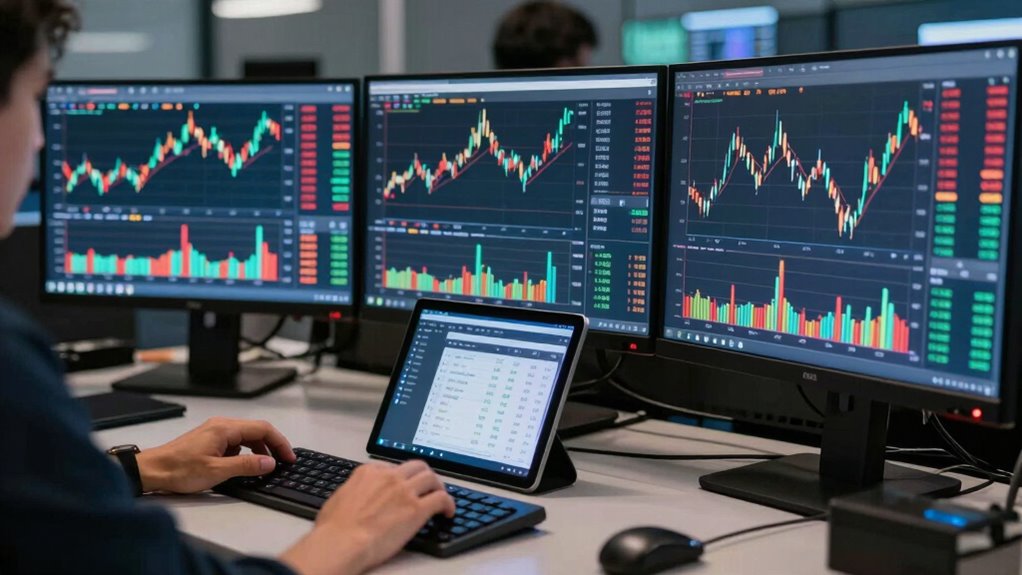
Market makers play a essential role in altcoin trading by providing liquidity and guaranteeing smooth price movements on exchanges. They act as intermediaries who constantly buy and sell altcoins, creating a steady flow of transactions that keep the market active. When you look at trading platforms, you’ll notice that some coins are more liquid than others. That’s often thanks to market makers who contribute to large liquidity pools, which are fundamentally reservoirs of buy and sell orders. These pools help facilitate quick trades without causing drastic price swings, making it easier for traders like you to enter or exit positions at fair prices.
You might wonder how market makers manage to keep the market stable, especially during periods of high volatility. They do this by constantly adjusting their bids and asks, which are the prices they’re willing to buy or sell at. This ongoing activity helps maintain price stabilization, preventing wild price swings that could scare off traders or cause unnecessary losses. Because they provide a consistent presence in the market, they reduce the spread—the difference between the highest bid and the lowest ask—making trading more efficient and less costly for you. When spreads are narrow, you can execute trades quickly and at better rates, which is fundamentally during volatile market conditions.
Additionally, market makers often utilize yarn for scarves as part of their strategy to manage inventory and mitigate risks associated with large price movements. They also analyze market depth to better anticipate price changes and adjust their strategies accordingly. By actively participating in creating and managing liquidity pools, market makers make sure there’s always enough volume to support trades. This liquidity is essential because it lowers the risk of slippage—where your order gets filled at a less favorable price due to insufficient market depth. The presence of diverse market participants also helps stabilize prices by balancing supply and demand. Furthermore, the integration of professional services in their operations enhances their ability to manage complex trading scenarios effectively. A deep understanding of market dynamics enables them to respond swiftly to sudden changes, thereby safeguarding both their interests and market stability.
When liquidity pools are abundant, your trades are executed smoothly, and prices reflect the genuine supply and demand. This process ultimately fosters more trust in the market, encouraging more participation from traders and investors alike.
In essence, what market makers do in altcoin trading is more than just buying and selling. They’re behind the scenes, stabilizing prices and maintaining liquidity pools that keep the market functional and predictable. Their activities ensure that trading remains efficient, even during sudden price moves. Without them, the market could become fragmented, volatile, and less accessible to everyday traders. So, next time you see a tight spread or a quick trade, remember that market makers are working tirelessly to keep the altcoin market liquid and stable, making your trading experience smoother and more reliable.
As an affiliate, we earn on qualifying purchases.
Frequently Asked Questions
How Do Market Makers Profit From Altcoin Trading?
You profit from altcoin trading by acting as a market maker who provides liquidity and facilitates trades. You do this through strategies like bid-ask spreads, earning profits from the difference. However, be cautious, as some might engage in market manipulation to influence prices. Your goal is to maintain a steady flow of buy and sell orders, profiting from volume and spreads while managing risks.
What Are the Risks Faced by Market Makers?
You face significant risks as a market maker, with liquidity provision being a major concern—if you can’t attract enough traders, your profits suffer. Additionally, regulatory challenges can disrupt your operations, especially as laws around cryptocurrency tighten worldwide. Market volatility also poses a threat; during sharp price swings, you might incur losses if your bids and asks aren’t properly managed. Staying adaptable and compliant helps mitigate these risks.
How Do Market Makers Influence Price Stability?
Market makers influence price stability by providing liquidity through continuous buy and sell orders, which enhances market depth. This active liquidity provision prevents drastic price swings, making the market more stable. When you see steady trading activity and tight spreads, it’s often due to market makers balancing supply and demand. Their role helps maintain orderly trading, ensuring prices don’t fluctuate wildly and that there’s always sufficient liquidity for traders like you.
What Tools Do Market Makers Use?
You’ll find market makers use tools like order book strategies and liquidity provision to manage their trades. They place buy and sell orders strategically, filling gaps in the order book to guarantee smooth trading and tighter spreads. By continuously adding and removing liquidity, they stabilize prices and prevent sudden swings. This active management helps create a more predictable trading environment, making it easier for traders to execute their orders efficiently.
Can Individuals Become Market Makers?
Yes, you can become a market maker, riding the coincidence of order book dynamics and liquidity provision. By consistently providing buy and sell orders, you help stabilize markets and earn from the bid-ask spread. It’s a strategic game that requires understanding market conditions and quick reactions. While challenging, with the right tools and knowledge, individuals can step into market-making roles, contributing to liquidity and gaining trading advantages.
As an affiliate, we earn on qualifying purchases.
Conclusion
Understanding what market makers do in altcoin trading helps you grasp the market’s underlying dynamics. They provide liquidity, reduce price volatility, and facilitate smoother transactions, often earning profits through bid-ask spreads. Notably, market makers can account for up to 70% of trading volume on some exchanges, highlighting their essential role. Recognizing their influence allows you to make more informed trading decisions and navigate the volatile altcoin market with greater confidence.
spread narrowing trading platform
As an affiliate, we earn on qualifying purchases.
As an affiliate, we earn on qualifying purchases.
cryptocurrency market depth analysis
As an affiliate, we earn on qualifying purchases.
As an affiliate, we earn on qualifying purchases.
Halloween Picks
halloween
As an affiliate, we earn on qualifying purchases.