
📊 Full opportunity report: 2026 AI Outlook: 10 Innovations Set To Make Waves on ThorstenMeyerAI.com — validation score, market gap, and execution plan.

Get smart everyday buys delivered free — and shop member deals
- Fast, free delivery on millions of items
- Access to Prime Big Deal Days deals on October 6–7
- Prime Video, Amazon Music and more included
TL;DR
In 2026, ten key AI innovations are anticipated to reshape industries, from advanced natural language processing to autonomous systems. This report highlights confirmed developments and ongoing projections, explaining their potential impact.
Experts predict that in 2026, ten major AI innovations will significantly influence technology, industry, and society. For a detailed overview, see the original analysis. These developments, rooted in ongoing research and current technological trends, are expected to redefine capabilities in natural language processing, autonomous systems, and more. While some innovations are already in early deployment, others remain in research phases, with their full impact yet to be realized. This trend is also reflected in the latest industry reports.
According to industry forecasts and expert sources, the ten innovations include breakthroughs in large language models, autonomous vehicles, AI-driven healthcare diagnostics, and advanced robotics. For instance, improvements in natural language understanding are expected to enable more seamless human-computer interactions, while autonomous systems may become more reliable and widespread in logistics and manufacturing. Several companies and research institutions have announced pilot projects or prototypes aligning with these trends, though full-scale adoption will depend on regulatory and technical developments.
Confirmed advancements include the deployment of more sophisticated AI models capable of context-aware reasoning, and ongoing efforts in autonomous vehicle testing in multiple regions. For insights into the latest AI product trends, see industry analyses. Additionally, AI applications in personalized medicine are progressing, with early clinical trials showing promising results. However, some innovations, such as fully autonomous urban transport, remain in testing phases and are not yet commercially available at scale.
The 10 picks
- 1
 Sonos Arc Ultra Soundbar with Dolby Atmos – BlackView on Amazon →
 - 2
 Sonos Beam Gen 2 – Black – Soundbar with Dolby AtmosView on Amazon →
 - 3
 Bose TV Speaker – Compact Soundbar with Bluetooth and HDMI-ARC, Remote Includ…View on Amazon →
 - 4
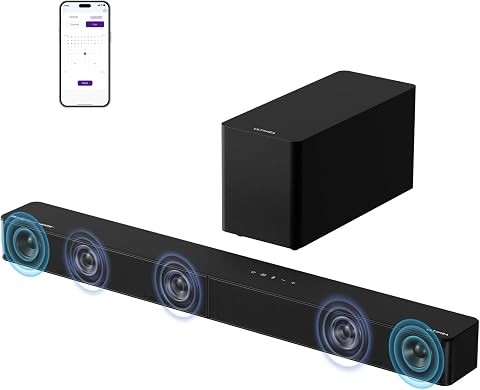 Ultimea 5.1CH Surround Sound Bar System with Dolby Atmos, Poseidon M60View on Amazon →
 - 5
 Fire TV Soundbar Plus (Newest Model) with Built-in Subwoofer, 3.1 Channel, Do…View on Amazon →
 - 6
 Sony S100F 2.0ch Soundbar with Bass Reflex Speaker, Bluetooth, and HDMI ARCView on Amazon →
 - 7
 Amazon Fire TV Soundbar, 2.0 Speaker with DTS Virtual:X and Dolby AudioView on Amazon →
 - 8
 Samsung B-Series Soundbar HW B400F 2.0 Ch with Built-in Subwoofer (2025 Model)View on Amazon →
 - 9
 ULTIMEA Sound Bar with Wireless Subwoofer, App Control, 2.1 ChannelView on Amazon →
 - 10
 Sound Bar for Smart TV with Bluetooth, ARC, Optical, AUX, Detachable Design, 80WView on Amazon →
Impacts of 2026 AI Innovations on Society and Industry
The anticipated AI innovations in 2026 are poised to transform multiple sectors, including healthcare, transportation, and entertainment. These developments could improve efficiency, safety, and personalization but also raise concerns around ethics, job displacement, and regulation. Understanding these impacts helps stakeholders prepare for the societal shifts ahead.
Current AI Trends and Foundations for 2026 Predictions
Over the past few years, AI has seen rapid advancements driven by increases in computational power, data availability, and algorithmic improvements. Large language models like GPT-4 have demonstrated unprecedented language understanding, while autonomous vehicle testing has expanded globally. Industry leaders and research institutions have outlined a roadmap for AI development, emphasizing safety, scalability, and ethical considerations. These trends set the stage for the innovations forecasted for 2026, although the pace and scope of adoption remain subject to technological, regulatory, and societal factors.
“By 2026, we expect to see AI systems that can understand and reason with human-like nuance, transforming how we interact with technology.”
— Dr. Emily Chen, AI Researcher
Uncertainties Surrounding the Timing and Adoption of Innovations
While forecasts are optimistic, many of these innovations depend on regulatory approval, technological breakthroughs, and societal acceptance. Some AI applications, particularly autonomous vehicles and healthcare diagnostics, are still in testing phases and may face delays or unforeseen challenges. Additionally, the exact timeline for widespread adoption remains uncertain, with some innovations possibly emerging earlier or later than predicted.
Next Steps for Industry and Regulators in 2024-2026
Key developments over the next two years will include pilot projects, regulatory frameworks, and further research validating these innovations. Stakeholders should monitor industry announcements, pilot program results, and policy discussions to gauge progress. Preparing for increased integration of AI into daily life and addressing ethical considerations will be crucial as these innovations approach commercialization.
Key Questions
Which AI innovation is most likely to impact daily life in 2026?
Advances in natural language understanding and autonomous systems are expected to significantly influence daily interactions with technology, including smarter virtual assistants and autonomous vehicles.
Are there any risks associated with these upcoming AI innovations?
Yes, potential risks include ethical concerns, job displacement, privacy issues, and safety challenges, especially with autonomous systems and healthcare applications. Regulatory measures will be critical to managing these risks.
Will these innovations be accessible globally?
Access will vary depending on regional regulations, infrastructure, and investment. While some innovations may be widely adopted, others could remain limited to certain markets or sectors initially.
How soon can we expect regulatory frameworks for these AI advances?
Regulatory discussions are already underway in many regions, with concrete frameworks likely to be established between 2024 and 2026 to support safe deployment of new AI technologies.
What industries will benefit most from the 2026 AI innovations?
Healthcare, transportation, manufacturing, and entertainment are expected to see the most significant benefits, driven by improvements in diagnostics, autonomous mobility, and personalized content.
Source: ThorstenMeyerAI.com
Fall Picks
fall essentials
As an affiliate, we earn on qualifying purchases.