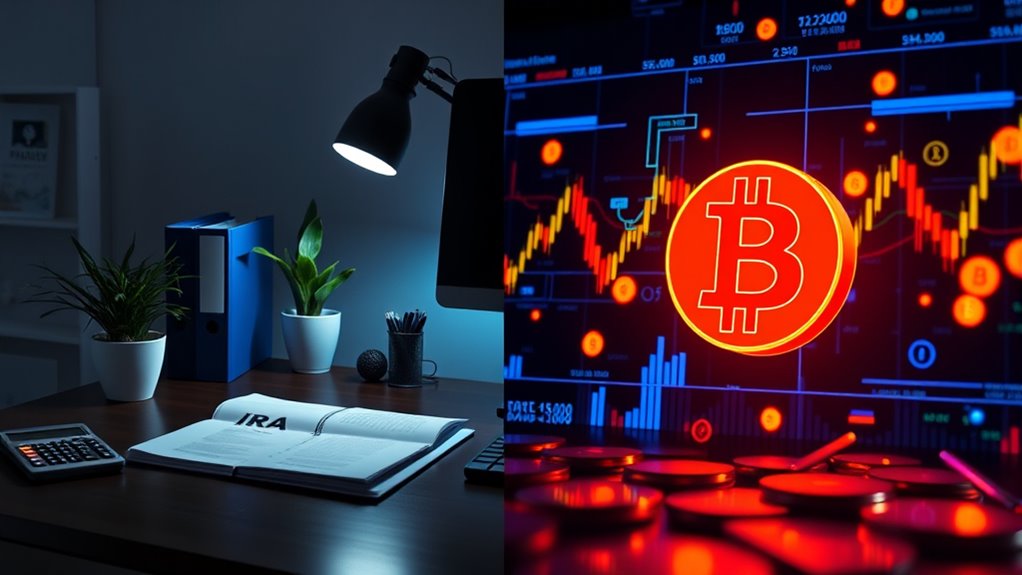
Self-Directed IRAs give you the flexibility to invest in various assets, like real estate and private equity, while Bitcoin IRAs focus solely on cryptocurrencies like Bitcoin and Ethereum. Both accounts offer tax advantages, but Self-Directed IRAs allow for more diverse investments compared to the limited scope of Bitcoin IRAs. You’ll also find differences in fees and security measures. Curious about the specifics of these accounts? There’s more to explore as you consider your options.
Key Takeaways
- Self-Directed IRAs allow investment in various assets like real estate and private equity, while Bitcoin IRAs focus exclusively on cryptocurrencies.
- Both account types offer tax advantages, but Self-Directed IRAs provide broader diversification aligned with individual financial goals.
- Bitcoin IRAs typically incur higher fees for setup and transactions compared to the administrative fees associated with Self-Directed IRAs.
- Security measures differ, with Bitcoin IRAs utilizing digital security features like multi-signature wallets, while Self-Directed IRAs require active risk management.
- Compliance with IRS regulations is essential for both account types, necessitating the use of an IRS-compliant custodian for asset management.
Amazon Product B0CT4669D9
As an affiliate, we earn on qualifying purchases.
Overview of Self-Directed IRAs
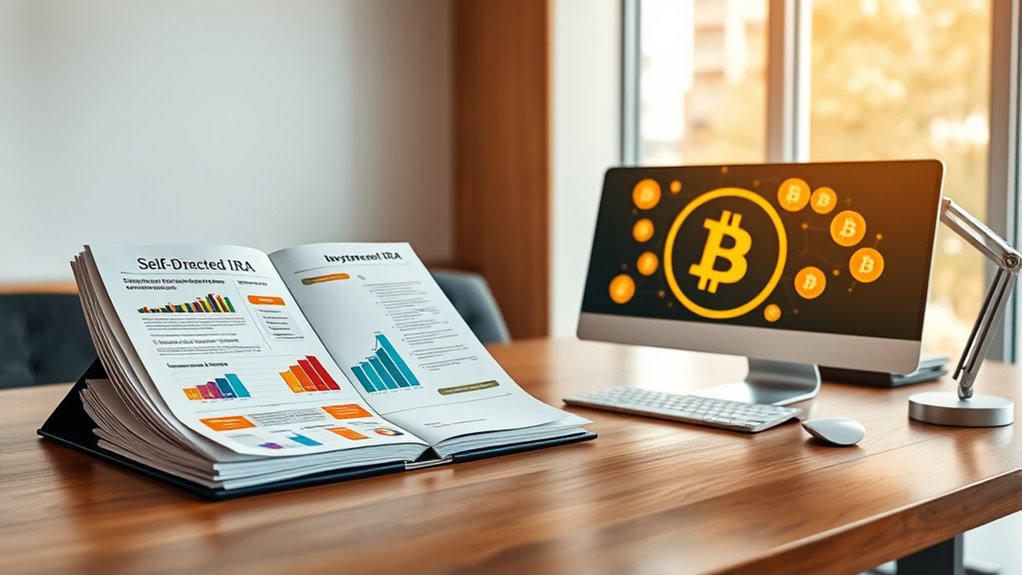
When you consider your retirement savings options, a Self-Directed IRA stands out as a versatile choice. It gives you the freedom to invest in a wide range of assets, including real estate, private equity, and even cryptocurrencies, all while enjoying tax advantages. Unlike traditional IRAs, which limit your investment choices, a Self-Directed IRA allows you to take control of your portfolio. You can diversify your investments according to your risk tolerance and financial goals. However, it’s essential to guarantee compliance with IRS regulations, as you’ll need an IRS-compliant custodian to manage your account. With the right strategy, a Self-Directed IRA can be a powerful tool for growing your retirement savings. Additionally, understanding the emotional fulfillment that drives individuals in financial decisions can enhance your investment strategy.
Amazon Product B0B96VK75R
As an affiliate, we earn on qualifying purchases.
Understanding Bitcoin IRAs
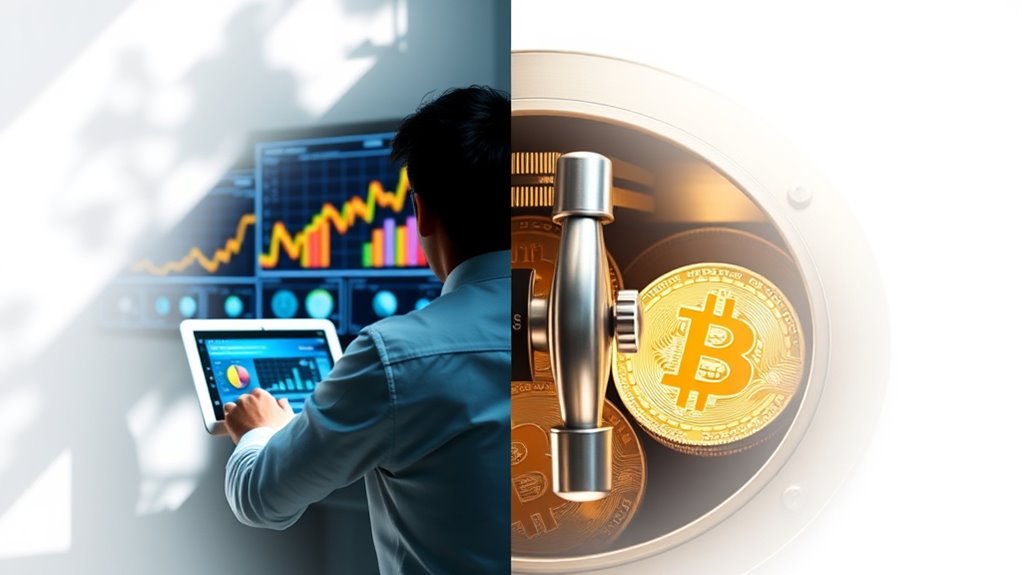
As you explore retirement investment options, Bitcoin IRAs offer a unique avenue for those looking to capitalize on the growing cryptocurrency market. These specialized accounts allow you to invest in digital currencies like Bitcoin, Ethereum, and others, providing the potential for tax-deferred growth. By holding cryptocurrencies within a retirement account, you benefit from the same tax advantages as traditional IRAs, while focusing exclusively on the digital asset class. With a Bitcoin IRA, you’re not just investing; you’re entering a rapidly evolving financial landscape. However, it’s essential to consider the volatility and risks associated with cryptocurrencies. Make sure you understand the market and your investment strategy before diving into a Bitcoin IRA.

Ailemei Direct Cooling Throw Blanket for Hot Sleepers,Double Sided Cold Effect, Lightweight Breathable Summer Bed Blanket for Couch, Transfer Heat to Keep Body Cool Night Sweats,50"x70"
KEEP YOU COOL ALL NIGHT: Ailemei Direct Cooling Blanket is designed to keep you cool and comfortable even...
As an affiliate, we earn on qualifying purchases.
Investment Options and Flexibility
Bitcoin IRAs provide a focused approach to investing in cryptocurrencies, but if you’re looking for all-encompassing options, Self-Directed IRAs might be the way to go. With a Self-Directed IRA, you can invest in various asset classes, including real estate, private stocks, and of course, cryptocurrencies. This flexibility allows you to diversify your portfolio beyond just digital assets. On the other hand, Bitcoin IRAs are tailored specifically for cryptocurrency investments, giving you deep exposure to digital markets. While both types of accounts offer direct investment decisions, Self-Directed IRAs provide more choices, allowing you to adapt your strategy to market changes and personal goals, making them a strong option for those seeking comprehensive investment flexibility. Additionally, the ability to invest in various asset classes can enhance your overall financial strategy.
Adamson B10 Navy Blue Bed Cooling System - Twin 75” L x 39” W - 100% Cotton Mattress Cooling Bed Pad for Night Sweats - Water Bed Cooler - Ideal for Hot Sleepers - 5-Year Assurance
KEEP YOUR BODY COOL: Thanks to an ingenious system using the principle of evaporative cooling, this bed cooler...
As an affiliate, we earn on qualifying purchases.
Tax Benefits and Regulations
Understanding the tax benefits and regulations associated with Self-Directed and Bitcoin IRAs is crucial for making informed investment decisions. Both types of IRAs offer tax-deferred growth, but it’s important to grasp the specifics.
- Tax Classification: Cryptocurrencies are considered property, allowing them to be held in IRAs under specific IRS regulations.
- Regulatory Compliance: You must ensure your account is managed by an IRS-compliant custodian for tax purposes.
- Withdrawal Tax Implications: Withdrawals from traditional IRAs are taxed, while Roth IRAs allow tax-free withdrawals under certain conditions. Additionally, understanding the role of color accuracy in investment decisions can aid in evaluating the overall value of cryptocurrency assets.
Fees and Costs Comparison
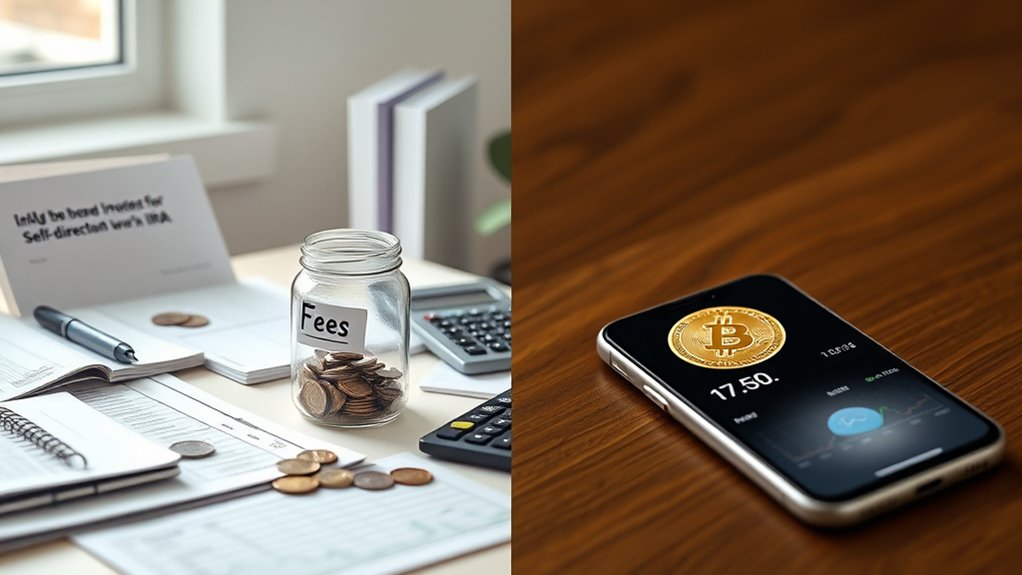
When comparing fees and costs between Self-Directed IRAs and Bitcoin IRAs, it’s essential to recognize that each type has its unique pricing structure. Bitcoin IRAs often have higher fees, including setup and trading fees, which can add up quickly. You might also encounter monthly maintenance fees depending on the provider. On the other hand, Self-Directed IRAs may involve administrative and custodial fees, which can vary based on the assets you choose to hold. Additionally, transaction fees for buying and selling cryptocurrencies are common with Bitcoin IRAs, while Self-Directed IRAs might not have as explicit fees. It’s vital to compare different providers to understand the total costs associated with each option before making a decision. Notably, understanding the importance of meal planning can also help in budgeting for any potential fees you may incur.
Security and Custody Considerations
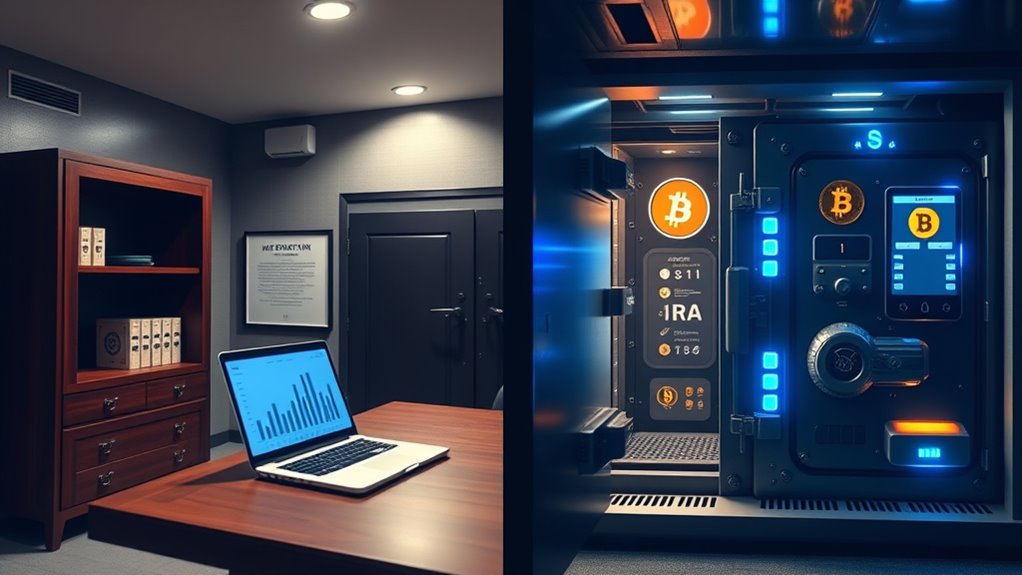
While both Self-Directed IRAs and Bitcoin IRAs require an IRS-compliant custodian to hold your assets, the security measures and custody arrangements can differ markedly. With Bitcoin IRAs, the focus is often on digital security, which can include features like multi-signature wallets and cold storage options. Conversely, Self-Directed IRAs may require more active risk management due to their diverse asset base.
Here are some key security and custody considerations to keep in mind:
- Digital Security: Bitcoin IRAs typically emphasize advanced cybersecurity measures.
- Insurance Coverage: Some custodians provide insurance for assets held in your IRA.
- Compliance: Both types must adhere to IRS regulations for asset custody. Additionally, understanding the importance of advanced cybersecurity measures can further enhance your investment’s safety.
Frequently Asked Questions
Can I Convert a Traditional IRA to a Self-Directed IRA?
Yes, you can convert a traditional IRA to a self-directed IRA. You’ll need to follow a few steps, including contacting your current IRA custodian to initiate the rollover. Make sure to choose a custodian that specializes in self-directed accounts, as they’ll help you navigate the investment options available. Once the transfer is complete, you can start investing in alternative assets like real estate or cryptocurrencies, gaining more control over your retirement portfolio.
What Are the Withdrawal Rules for Self-Directed IRAS?
When you withdraw from a self-directed IRA, you generally must be at least 59½ years old to avoid early withdrawal penalties. Withdrawals are taxed as ordinary income, and if you’re under that age, you might face a 10% penalty. You can take distributions in cash or assets, but remember, the IRS has specific rules on how and when you can withdraw to maintain your tax benefits. Always consult a tax advisor for personalized guidance.
How Do I Choose a Custodian for My IRA?
Choosing a custodian for your IRA can feel like picking a ship captain for your voyage. Start by ensuring they’re IRS-approved and experienced with your desired assets. Compare fees, services, and customer reviews to gauge reliability. Check if they provide educational resources to help you navigate your investments. Ultimately, consider their security measures—after all, you want your retirement treasures protected as you sail toward financial freedom.
Are There Limits on Contributions to a Bitcoin IRA?
Yes, there are limits on contributions to a Bitcoin IRA, just like any other IRA. For 2023, you can contribute up to $6,500 if you’re under 50 and $7,500 if you’re 50 or older. These limits apply to your total contributions across all IRAs, not just your Bitcoin IRA. Be sure to stay within these limits to avoid penalties and maximize your retirement savings efficiently.
Can I Use My Self-Directed IRA for Personal Loans?
You can’t use your Self-Directed IRA for personal loans. The IRS prohibits using retirement accounts for personal expenses, including loans to yourself. However, you can invest in alternative assets through your Self-Directed IRA, which might offer other growth opportunities. Just remember, any transactions must conform to IRS regulations to avoid penalties. Always consult a tax advisor or financial professional to ensure compliance and make informed decisions about your retirement investments.
Conclusion
In conclusion, while both self-directed IRAs and Bitcoin IRAs offer unique investment opportunities, they cater to different needs. Did you know that over 60% of millennials are interested in investing in cryptocurrencies? This shows the growing appeal of Bitcoin IRAs among younger investors. Ultimately, choosing the right option depends on your investment goals, risk tolerance, and desire for flexibility. Make sure you weigh the pros and cons before diving in!