

Tokenomics influences your altcoin’s survival by shaping supply, demand, and incentives that keep the market stable. By implementing mechanisms like burning or staking rewards, it dampens market swings and builds trust through transparent distribution. It also encourages your involvement with rewards, voting rights, and clear utility. Understanding these economic factors helps your project stay resilient amid volatility. Keep exploring to discover how balancing these elements can guarantee long-term success for your altcoin.

Get smart everyday buys delivered free with Prime
- Fast, free delivery on millions of items
- Prime Video, Amazon Music and more included
- Member-only deals all year
Key Takeaways
- Effective tokenomics balances supply, demand, and incentives to maintain long-term project stability and investor confidence.
- Transparent distribution and utility foster trust and active community engagement vital for altcoin survival.
- Mechanisms like burning and staking rewards help stabilize prices and reduce market volatility impacts.
- Adaptive reward systems aligned with market conditions ensure network security and project resilience.
- Strong tokenomics incentivizes ongoing participation, loyalty, and governance, supporting long-term growth.
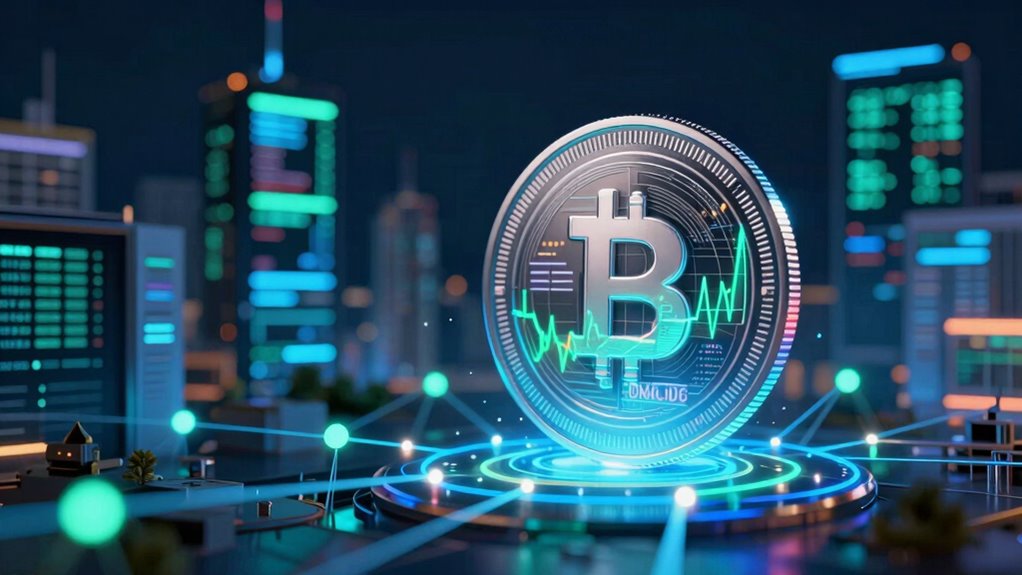
Understanding tokenomics is fundamental if you want to grasp how altcoins survive and thrive in the competitive crypto landscape. It’s not just about the technology behind a coin but about how its economic model influences its stability and growth. In the volatile world of cryptocurrencies, market volatility can quickly wipe out investments if not managed properly. Tokenomics plays a key role here, shaping how a coin’s supply, distribution, and incentives respond to fluctuating prices. A well-designed token economy can dampen the impact of sudden market swings, giving investors confidence that the coin has mechanisms to stabilize value over time. For example, some altcoins implement burning mechanisms or staking rewards to reduce supply or incentivize holding, which helps counteract the effects of market volatility. This careful balancing act is indispensable for maintaining trust and encouraging long-term participation.
Effective tokenomics stabilizes altcoins by managing supply, incentives, and market responses, fostering trust and long-term growth.
Community engagement is another key factor where tokenomics proves its importance. A strong, active community can be the backbone of an altcoin’s survival. When users feel invested—both financially and emotionally—they’re more likely to support development, promote the project, and participate in governance. Tokenomics influences community engagement by rewarding participation, whether through airdrops, voting rights, or staking rewards. These incentives foster a sense of ownership and involvement, which can lead to sustained enthusiasm and advocacy. Furthermore, transparent token distribution and clear utility create trust, encouraging more community members to join and stay active. When people see that their contributions directly impact the project’s success, they’re more inclined to participate in discussions, share ideas, and advocate for the coin’s growth. Additionally, transparent tokenomics can build trust among investors and users by clearly demonstrating how resources are allocated and incentives are aligned. Recognizing the importance of governance mechanisms, projects often incorporate voting systems that empower community decision-making and enhance project resilience. Moreover, tokenomics can influence how the project responds to market volatility, making it more resilient. For instance, some altcoins incorporate mechanisms that automatically adjust reward distributions based on market conditions, helping to maintain network security and user interest despite price swings. An understanding of market dynamics is vital for designing effective token models that adapt to changing conditions and sustain long-term stability. A comprehensive understanding of economic incentives reveals how these structures are critical for aligning stakeholder interests and ensuring the project’s long-term viability. By aligning incentives with the project’s health, tokenomics fosters stability and community loyalty, even during turbulent times. These economic structures demonstrate that successful altcoins don’t rely solely on hype or technology—they depend on a well-crafted token model that balances supply, demand, and community incentives to guarantee longevity.
In essence, your understanding of tokenomics reveals its surprising role in the survival of altcoins. It’s a delicate interplay of managing market volatility, nurturing community engagement, and creating incentives that encourage ongoing participation. When these elements come together effectively, they form a resilient foundation that helps altcoins not just survive, but thrive amid the unpredictable tides of the crypto world.
As an affiliate, we earn on qualifying purchases.
Frequently Asked Questions
How Does Tokenomics Influence Investor Confidence in Altcoins?
Tokenomics greatly influences your confidence in altcoins by shaping token distribution and community incentives. When tokens are fairly distributed, you see transparency and trust, making you more likely to invest. Strong community incentives encourage active participation, which boosts the altcoin’s value and stability. If these aspects align well, you’ll feel more secure knowing the project is sustainable, transparent, and committed to rewarding its community, increasing your overall confidence.
Can Tokenomics Strategies Prevent Altcoin Scams?
Surprisingly, solid tokenomics strategies can help prevent altcoin scams, even if it feels ironic. By prioritizing whitepaper credibility and transparent community engagement, you build trust and deter malicious actors. When investors see clear, well-structured tokenomics, they’re less likely to fall for scams. So, a transparent approach isn’t just good practice—it’s a powerful shield against deception, making the crypto space safer for everyone involved.
What Are the Common Pitfalls in Designing Tokenomics?
When designing tokenomics, you often stumble into pitfalls like uneven token distribution, which can lead to centralization and distrust. You might also fail to align incentives properly, causing users to act against the network’s health. To avoid these issues, guarantee fair token distribution and create incentive structures that promote long-term engagement. Balancing these factors helps build trust, decentralize control, and foster sustainable growth for your altcoin.
How Does Tokenomics Impact Altcoin Liquidity?
Tokenomics directly impacts altcoin liquidity by influencing market adoption and price stability. When well-designed, it encourages users to hold and trade your coin, boosting liquidity. A balanced token supply and demand help maintain price stability, attracting traders and investors. If the tokenomics incentivizes long-term holding and reduces volatility, your altcoin becomes more attractive, leading to increased trading volume, better liquidity, and sustained market growth.
Are There Regulatory Challenges Related to Tokenomics?
Yes, you face regulatory challenges related to tokenomics, mainly due to regulatory compliance and legal ambiguities. Authorities often struggle to classify tokens, creating uncertainty about whether they’re securities, commodities, or something else. This ambiguity can lead to legal risks, enforcement actions, or restrictions. To navigate these challenges, you need to stay updated on evolving regulations, guarantee transparency, and design tokenomics structures that align with legal standards.
As an affiliate, we earn on qualifying purchases.
Conclusion
So, as you navigate the unpredictable world of altcoins, remember that tokenomics isn’t just a background detail—it’s the secret weapon that can make or break a coin’s future. Will your favorite altcoin stand the test of time? The answer depends on how well its tokenomics is crafted and adapted. Stay vigilant, because in this game, the tiniest shift could hold the key to its survival—or its sudden downfall. Are you ready to uncover what’s next?
altcoin governance voting system
As an affiliate, we earn on qualifying purchases.
As an affiliate, we earn on qualifying purchases.
crypto community engagement tools
As an affiliate, we earn on qualifying purchases.
As an affiliate, we earn on qualifying purchases.
Fall Picks
fall essentials
As an affiliate, we earn on qualifying purchases.