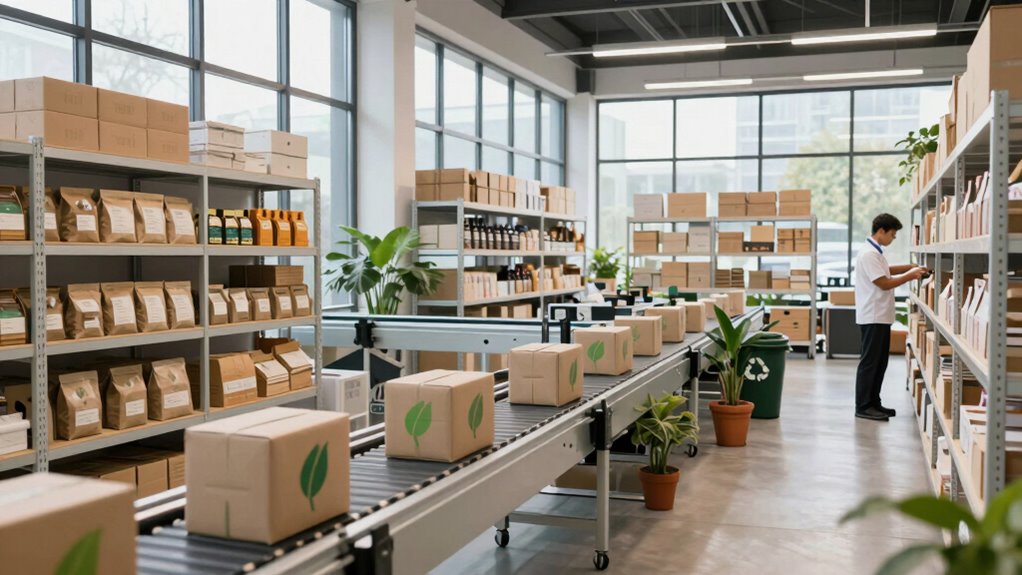

To build a sustainable distribution plan, focus on tight inventory control using real-time data and forecasting tools to prevent waste. Integrate eco-friendly practices like low-emission transportation, packaging, and consolidation. Cultivate strong partnerships with suppliers and logistics providers for better coordination and responsiveness. Use technology to monitor operations and keep improvements on track. By embedding sustainability into your strategy and continuously refining your approach, you’ll create a distribution system that’s efficient and environmentally responsible—keep exploring to learn more.

Get smart everyday buys delivered free with Prime
- Fast, free delivery on millions of items
- Prime Video, Amazon Music and more included
- Member-only deals all year
Key Takeaways
- Incorporate eco-friendly packaging, shipment consolidation, and low-emission transportation options into your distribution strategy.
- Build resilient partnerships with suppliers and logistics providers to ensure transparency and quick response to disruptions.
- Utilize real-time data and automation tools for accurate inventory forecasting and reducing waste.
- Regularly review and adjust distribution practices to align with industry trends and sustainability goals.
- Prioritize resource-efficient logistics and minimize excess stock to support long-term environmental and operational sustainability.

Have you ever wondered how to create a distribution plan that’s not only effective but also sustainable in the long run? The key lies in designing a system that balances efficiency with flexibility, making sure you can adapt as your business grows. First, focus on solid inventory management. Keeping tight control over your stock helps prevent overstocking or stockouts, both of which can waste resources and hurt customer satisfaction. Use real-time data and forecasting tools to predict demand accurately. This way, you avoid excess inventory that ties up capital or shortages that delay order fulfillment. An efficient inventory system also reduces waste, which is essential for sustainability. When you understand your inventory flow, you can identify slow-moving products and make smarter purchasing decisions, minimizing excess and obsolete stock. Incorporating sustainable practices into your operations ensures that your distribution system remains environmentally responsible and resource-efficient. Additionally, understanding the importance of natural pools can inspire eco-friendly choices in your logistics and packaging strategies.
Effective, flexible inventory management with real-time data and forecasting ensures sustainable, adaptable distribution.
Equally important are your partnership strategies. Building strong relationships with suppliers, distributors, and logistics providers creates a more resilient distribution network. When you cultivate trust and open communication, you can negotiate better terms, streamline processes, and respond swiftly to disruptions. For example, having reliable partnerships might allow you to switch carriers or suppliers more easily if needed, reducing delays and costs. It also encourages collaborative problem-solving, which is crucial for long-term sustainability. By sharing forecasts and inventory data with partners, you ensure everyone is aligned, minimizing waste and overproduction.
Another aspect to weigh is integrating technology into your distribution plan. Automated systems and software help you track inventory levels, monitor shipment statuses, and analyze performance metrics. These tools enable you to make data-driven decisions quickly, reducing errors and improving overall efficiency. Using technology also supports transparency and communication with your partners, fostering stronger collaboration.
Moreover, sustainability isn’t just about operations; it’s also about mindset. You need to prioritize practices that reduce environmental impact, such as opting for eco-friendly packaging, consolidating shipments to lower carbon emissions, and choosing transportation methods with a lower carbon footprint. When you embed these principles into your distribution strategy, sustainability becomes a core part of your business, not an afterthought.
Ultimately, building a sustainable distribution plan requires continuous evaluation and adjustment. Stay informed about industry trends, regularly review your inventory management practices, and nurture your partnership strategies. By doing so, you create a flexible, efficient, and eco-conscious distribution system that supports your business’s growth today and in the future.
eco-friendly packaging materials
As an affiliate, we earn on qualifying purchases.
As an affiliate, we earn on qualifying purchases.
Frequently Asked Questions
How Do I Measure the Sustainability of My Distribution Plan?
You measure your distribution plan’s sustainability by tracking its carbon footprint and resource efficiency. Regularly analyze transportation emissions, energy use, and waste management to see how eco-friendly your operations are. Set clear benchmarks and monitor progress over time. If you notice reductions in emissions and improvements in resource use, your plan is becoming more sustainable. Adjust your strategies accordingly to continually enhance environmental impact.
What Are Common Pitfalls to Avoid in Sustainable Distribution Planning?
Did you know that 60% of companies face issues due to overlooked waste reduction strategies? To avoid common pitfalls, prioritize minimizing your carbon footprint by choosing eco-friendly transport options and optimizing routes. Don’t neglect planning for waste reduction, as inefficient packaging can spike costs and harm the environment. Always evaluate your supply chain regularly, stay adaptable, and avoid overextending resources, ensuring your distribution plan remains sustainable and resilient.
How Can Technology Improve the Sustainability of Distribution?
Technology enhances sustainability by enabling you to implement green logistics strategies and eco-friendly packaging. You can optimize routes with advanced software, reducing fuel consumption and emissions. Digital tracking improves inventory management, minimizing waste. Plus, eco-friendly packaging solutions, supported by innovative materials, cut down on waste and environmental impact. These tech tools help you create a distribution plan that’s more efficient, environmentally responsible, and aligned with sustainable goals.
What Role Does Supplier Partnership Play in Sustainable Distribution?
Supplier partnership plays a vital role in sustainable distribution by fostering supplier collaboration and ensuring ethical sourcing. When you build strong relationships, you can align your sustainability goals, promote responsible practices, and reduce environmental impact. Collaborating with suppliers who prioritize ethical sourcing helps you maintain transparency, improve supply chain efficiency, and meet consumer expectations for sustainability. Ultimately, these partnerships create a resilient, eco-friendly distribution system that benefits your business and the planet.
How Often Should I Review and Update My Distribution Plan?
You should review your distribution plan regularly—ideally quarterly—to keep it fresh and aligned with your goals. During these reviews, focus on inventory management to avoid excess or shortages, and gather customer feedback to understand their evolving needs. This ongoing process helps you identify areas for improvement, adapt to market changes, and maintain a sustainable, efficient distribution system that truly supports your business growth.
low emission transportation options
As an affiliate, we earn on qualifying purchases.
As an affiliate, we earn on qualifying purchases.
Conclusion
Remember, crafting a sustainable distribution plan is like tending a garden—you must nurture it with patience, adaptability, and foresight. By staying flexible and listening to your growth signals, you guarantee your efforts flourish without draining your resources. Just as Daedalus designed wings that balanced innovation with caution, your plan should blend ambition with sustainability. With care and vigilance, your distribution strategy will stand the test of time, becoming a true masterpiece of resilience and purpose.
As an affiliate, we earn on qualifying purchases.
As an affiliate, we earn on qualifying purchases.
Fall Picks
fall essentials
As an affiliate, we earn on qualifying purchases.