
When your country’s exchange reserves suddenly drop, it’s often a warning sign of underlying economic stress. Reserves help defend the currency and stabilize prices, so their decline signals trouble ahead. As reserves shrink, the currency becomes more volatile, and depreciation may follow, leading to rising import costs and inflation. Noticing these shifts early can give you clues about upcoming price increases, and if you want to understand how this all connects, more insights await.
Key Takeaways
- Declining reserves reduce a country’s ability to defend its currency, signaling potential upcoming economic stress.
- Sudden reserve drops often precede currency depreciation, indicating imminent inflationary pressures.
- Low reserve levels increase vulnerability to external shocks, which can trigger price increases before official inflation data.
- Persistent reserve depletion suggests weakening economic resilience, foreshadowing future inflation and market instability.
- Monitoring reserve trends provides early warning signs of financial stress before market prices respond.
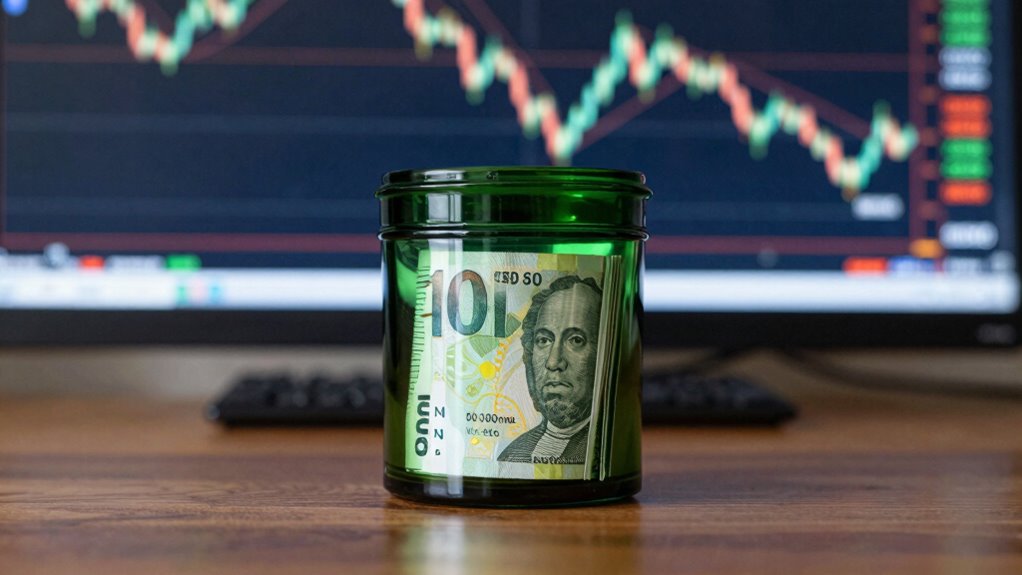
When a country’s exchange reserves decline sharply, it can trigger significant price stress in the economy. You might not see it immediately, but this reduction signals underlying vulnerabilities that could soon impact the cost of goods and services. As reserves dwindle, the government or central bank often steps in to manage currency fluctuations, trying to stabilize the local currency and maintain economic stability. However, these actions reveal underlying tensions, and the depletion of reserves can be an early warning sign that inflationary pressures are brewing beneath the surface.
Reserve management becomes *vital* during times of declining reserves. If you pay close attention, you’ll notice that countries with diminishing reserves often struggle to defend their currency against speculative attacks or sudden shifts in investor confidence. When reserves drop, it becomes harder for a country to intervene in currency markets effectively. This can lead to increased volatility, where the local currency might depreciate rapidly, causing import prices to rise. As import costs go up, inflation usually follows, hitting consumer prices and squeezing household budgets.
Declining reserves weaken currency defense, increase volatility, raise import prices, and often lead to rising inflation and squeezed household budgets.
Currency fluctuations are often the first tangible signals that reserves are under stress. You might observe the local currency weakening against major currencies, which can be a sign that the country’s foreign exchange buffer is running low. When reserves are ample, central banks can use them to smooth out these fluctuations, preventing sharp drops. But once reserves are depleted, the currency’s value becomes more susceptible to external shocks and speculative moves, which then translate into rising prices domestically. This dynamic creates a feedback loop where declining reserves lead to currency depreciation, which then fuels inflation, prompting further reserve depletion as authorities attempt to stabilize the currency.
In essence, monitoring reserve levels provides a window into a country’s economic health before prices start to spike visibly. If you’re watching, you’ll see that a steady or growing reserve buffer generally indicates good reserve management and a resilient economy. Conversely, a sharp decline hints at potential trouble ahead, with price pressures likely to follow. This is why reserve management isn’t just about holding enough foreign currency; it’s about using those reserves strategically to shield the economy from shocks. When reserves fall, it’s often a prelude to broader price stress, signaling you to watch for inflationary trends and currency instability that could soon impact everyday costs and overall economic stability.

Asia Bond Monitor – November 2022
As an affiliate, we earn on qualifying purchases.
As an affiliate, we earn on qualifying purchases.
Frequently Asked Questions
How Do Exchange Reserves Impact Currency Stability During Economic Crises?
During economic crises, your country’s foreign exchange reserves play a vital role in maintaining currency stability. When reserve management is proactive, you can use reserves to support your currency, prevent sharp depreciation, and instill investor confidence. Conversely, dwindling reserves signal stress, making your currency vulnerable. Carefully managing these reserves helps you mitigate volatility, preserve economic stability, and respond swiftly to external shocks, ensuring your currency remains as stable as possible during turbulent times.
Can Rising Reserves Indicate Upcoming Inflation Risks?
Rising reserves might seem like a fortress guarding economic stability, but they can also signal inflation anticipation. If reserves increase due to reserve depletion or intervention, it could hint at upcoming inflation risks. You should watch for patterns where central banks accumulate reserves to defend currency or control money supply, as this often precedes inflationary pressures. Staying alert helps you anticipate shifts before prices start to surge dramatically.
What External Factors Influence Changes in a Country’s Reserves?
External factors like trade deficits and capital flows influence changes in your country’s reserves. When trade deficits grow, more reserves are needed to cover imports, reducing reserves. Conversely, positive capital flows, such as foreign investments, increase reserves as funds enter your country. Shifts in these factors signal economic stress or stability, affecting currency strength and monetary policy. Monitoring them helps you anticipate reserve movements and potential economic vulnerabilities.
How Quickly Can Reserve Changes Predict Market Reactions?
You might think reserve changes take time to signal market shifts, but they actually can predict reactions quickly. When speculative trading causes reserve fluctuations, markets often respond within hours or days. By monitoring these reserve movements closely, you can anticipate potential stress before prices move. This rapid insight helps you stay ahead, understanding how external pressures and investor behavior influence market dynamics almost instantaneously.
Are Reserve Levels Reliable Indicators Across Different Economies?
Reserve levels can be reliable indicators if there’s transparency about reserves and diversification across assets. You should consider that economies with transparent reserve data and diversified holdings offer clearer signals of potential stress. However, in countries lacking transparency or heavily reliant on a single reserve asset, these indicators might be misleading. So, always analyze reserve transparency and diversification before relying on reserve levels to assess economic health.

Foreign Exchange Reserve Management Innovation(Chinese Edition)
As an affiliate, we earn on qualifying purchases.
As an affiliate, we earn on qualifying purchases.
Conclusion
By keeping an eye on exchange reserves, you can spot early signs of market stress before prices start to drop. Think of reserves as a financial thermometer—when they dip unexpectedly, it signals trouble brewing. For example, imagine a central bank suddenly reducing its reserves during political turmoil; you’d want to be cautious before widespread currency devaluation hits. Monitoring these shifts helps you stay ahead and make smarter, more informed decisions in uncertain times.

Accusize Industrial Tools 0-1'' by 0.0005'' Dial Indicators, P900-S099
AGD 2 Style Precision: Conforms to AGD 2 specifications for consistent and reliable measurements.
As an affiliate, we earn on qualifying purchases.
As an affiliate, we earn on qualifying purchases.
FX Options with Python: Pricing, Volatility Surfaces, Hedging, and Systematic Analysis
As an affiliate, we earn on qualifying purchases.
As an affiliate, we earn on qualifying purchases.