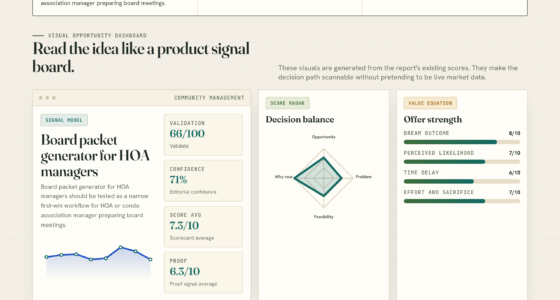

📊 Full opportunity report: When a Content Network Starts Publishing to Itself on ThorstenMeyerAI.com — validation score, market gap, and execution plan.
TL;DR
A growing trend in digital publishing sees content networks shifting from external distribution to internal publishing. This change enhances audience ownership, leverages network effects, and alters revenue models, but introduces operational risks. The development signals a major evolution in content strategy.
A prominent content network has started publishing content directly to its own websites, newsletters, and social channels, reducing reliance on external distribution platforms. This move aims to strengthen audience loyalty, control data, and create a self-sustaining ecosystem, making it a significant shift in digital publishing strategies.
This development was first reported by industry sources in late 2023, indicating that the network is increasingly cross-posting and linking content internally across its various properties. The move is driven by a desire for greater audience ownership, reduced dependence on third-party platforms, and the potential to leverage network effects for growth.
Experts note that this approach allows the network to share traffic among its sites, newsletters, and social channels, creating a more cohesive brand and engaging audiences across multiple touchpoints. It also enables better data collection and personalized content delivery, which can improve retention and monetization.
However, managing such interconnected content ecosystems presents operational challenges, including maintaining brand consistency, quality control, and avoiding audience fatigue. The shift also raises questions about how AI tools might influence content creation and curation within these internal networks.
Implications for Audience Control and Revenue Models
This trend signifies a move toward greater control over audience relationships and revenue streams, as content networks aim to build self-sufficient ecosystems. By publishing internally, they can reduce reliance on external platforms that often change algorithms or policies, risking audience reach and income. The approach also enhances the potential for data-driven personalization, increasing engagement and monetization opportunities. For creators and publishers, this signals a strategic shift toward decentralization and ownership in digital content distribution, which could reshape industry dynamics.

The Amazon Management System: The Ultimate Digital Business Engine That Creates Extraordinary Value for Both Customers and Shareholders
As an affiliate, we earn on qualifying purchases.
As an affiliate, we earn on qualifying purchases.
Rise of Ecosystem Building in Digital Publishing
Over recent years, technological advances and economic shifts have empowered creators and publishers to develop their own ecosystems. Platforms like Substack and Ghost have lowered barriers to building independent digital spaces, encouraging a move away from traditional gatekeepers, as discussed in this analysis. This shift is driven by a desire for more control over audience data, content, and revenue, especially as platform policies and algorithms become more unpredictable, as detailed in the original analysis.
In 2023, industry insiders observed several networks adopting internal publishing strategies, signaling a broader trend of ecosystem building. This approach aligns with the increasing importance of direct audience engagement and data ownership, facilitated by automation, analytics, and content management tools.
“Moving content internally allows networks to leverage cross-linking and shared data, creating a more resilient and scalable system.”
— Jane Doe, digital strategist
audience analytics tools for websites
As an affiliate, we earn on qualifying purchases.
As an affiliate, we earn on qualifying purchases.
Unclear Long-Term Impact and Risks
It remains uncertain how sustainable and scalable this internal publishing model is over the long term. Questions persist about operational complexity, quality management, and potential audience fatigue. Additionally, the influence of AI on content curation and personalization within these ecosystems is still evolving, and its impact on content quality and diversity is not yet clear.

How To Start Your Newsletter Business: The #1 Best Email Marketing Tool
As an affiliate, we earn on qualifying purchases.
As an affiliate, we earn on qualifying purchases.
Future Developments and Industry Adoption
Industry observers expect more content networks to adopt internal publishing strategies in the coming months, experimenting with different formats and technologies. Monitoring how these ecosystems perform in terms of audience engagement, revenue, and operational efficiency will be key. Further integration of AI tools for content management and personalization is also anticipated, which could accelerate or complicate this trend.

Social Media Content Planner: Youtuber Planner
As an affiliate, we earn on qualifying purchases.
As an affiliate, we earn on qualifying purchases.
Key Questions
What does publishing to itself mean for content creators?
It means that content creators or networks focus on producing and sharing content within their own properties, linking and cross-promoting across sites, newsletters, and social channels to build a unified ecosystem.
Is this strategy only applicable to large networks?
No, smaller creators and niche networks can also adopt internal publishing to strengthen their audience relationships and control, but scale and operational capacity are considerations.
What are the main risks of internal publishing?
Operational complexity, maintaining content quality, brand consistency, and avoiding audience fatigue are key risks. Additionally, over-reliance on internal traffic may limit external reach if not managed carefully.
How might AI influence this internal publishing trend?
AI can assist in content curation, personalization, and automation within ecosystems, potentially enhancing engagement but also raising concerns about content diversity and authenticity.
Source: ThorstenMeyerAI.com