
You might be aware that El Salvador's bold move to adopt Bitcoin as legal tender has sparked intense debate. Recently, a controversial law proposal aimed at amending this initial Bitcoin Law has emerged, reflecting a shift in public sentiment. With growing skepticism about Bitcoin's stability and usability, the implications for businesses and the economy could be significant. What does this mean for the future of cryptocurrency in the country?
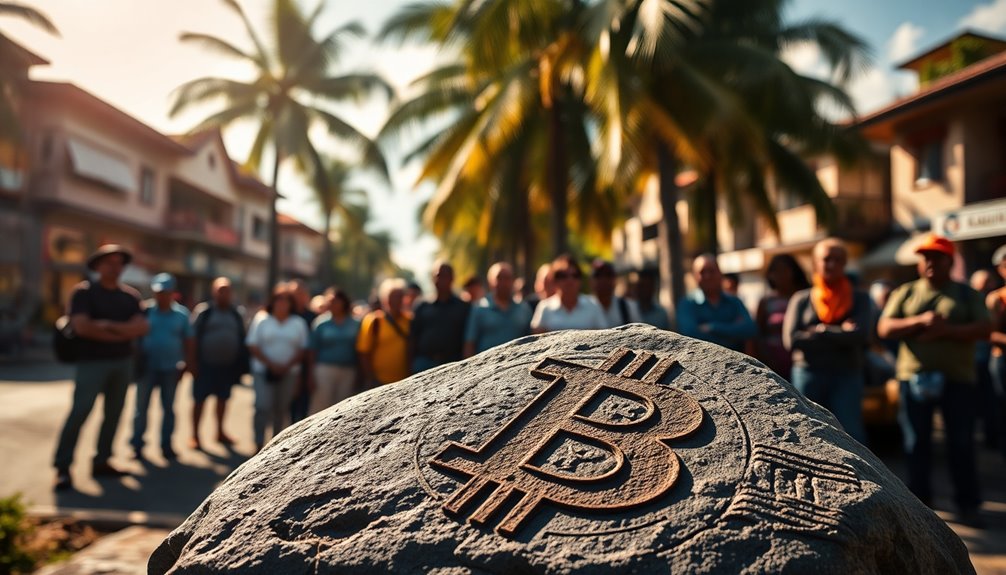
Since El Salvador became the first country to adopt Bitcoin as legal tender on September 7, 2021, the move has sparked intense debate and scrutiny. The Bitcoin Law, passed by the Legislative Assembly on June 9, aimed to increase financial inclusion and reduce remittance fees. However, the initial reaction to the law was mixed, with both international attention and domestic skepticism. Many Salvadorans questioned the practicality of using a volatile cryptocurrency in their daily lives, and by 2024, a staggering 92% had opted not to use Bitcoin for transactions.
The economic impact of Bitcoin in El Salvador has been minimal. While the government touted it as a way to enhance financial inclusion, it didn't significantly change the economic landscape. The US dollar continues to dominate, serving as the primary currency in most transactions. Although the policy brought increased tourism and attention from around the world, only a small percentage of businesses accepted Bitcoin. The supposed benefits for the economy didn't materialize as expected, with the Chivo wallet downloaded by three million people, representing 46% of the population.
The economic impact of Bitcoin in El Salvador has been minimal, with the US dollar remaining the primary currency.
Legal and regulatory changes soon followed. Under pressure from the IMF, El Salvador had to rethink its Bitcoin policies. A $1.4 billion loan agreement with the IMF mandated changes to the Bitcoin Law, leading to legislative amendments in January 2025. These amendments made Bitcoin use voluntary rather than mandatory for businesses. The government also stepped back from its earlier involvement in Bitcoin transactions, recognizing the need for a more stable economic approach.
Public perception of Bitcoin remained largely skeptical. Many Salvadorans viewed Bitcoin's volatility as a risk too great to take. Technical issues with the government's Chivo wallet compounded the problem, leading to incidents of hacking and user frustration. Even with various incentives, Bitcoin adoption remained low, and protests erupted against its mandatory use. Surveys indicated minimal actual usage for transactions, reflecting the population's hesitance.
Despite the controversy and challenges, the government continues to purchase Bitcoin, maintaining a significant reserve. Even as it reduces its involvement with the Chivo wallet, Bitcoin remains an integral part of the country's financial strategy. However, the ongoing risks associated with Bitcoin investments have raised alarms, especially from the IMF.
The global financial community watches closely, as El Salvador's experience sets a precedent for other nations contemplating similar policies. The future implications for both the country and the cryptocurrency landscape hang in the balance.
As an affiliate, we earn on qualifying purchases.
As an affiliate, we earn on qualifying purchases.
As an affiliate, we earn on qualifying purchases.
As an affiliate, we earn on qualifying purchases.