📊 Full opportunity report: The Power Of Benefit Check Bots In Social Determinants Of Health Programs on IdeaNavigator AI — validation score, market gap, and execution plan.

Get smart everyday buys delivered free with Prime
- Fast, free delivery on millions of items
- Prime Video, Amazon Music and more included
- Member-only deals all year
TL;DR
Benefit check bots are emerging as a promising tool to improve access to social benefits for low-income populations. They offer fast, accurate screening across multiple programs, filling a gap left by traditional manual processes. This development could significantly increase benefit uptake and reduce administrative burdens.
Benefit check bots are being tested as a new tool to streamline eligibility screening for social benefits, aiming to address long-standing gaps in access for low-income families. The technology, developed for healthcare systems, nonprofits, and government agencies, seeks to automate and accelerate the process of identifying benefits clients qualify for, potentially transforming how social determinants of health programs operate. This initiative comes amid a significant gap in benefits access, with over $100 billion in benefits going unclaimed annually due to fragmented eligibility rules, lengthy applications, and manual screening processes. The development is supported by recent shifts in policy and technology, making automated, multilingual screening feasible at near-zero marginal cost.
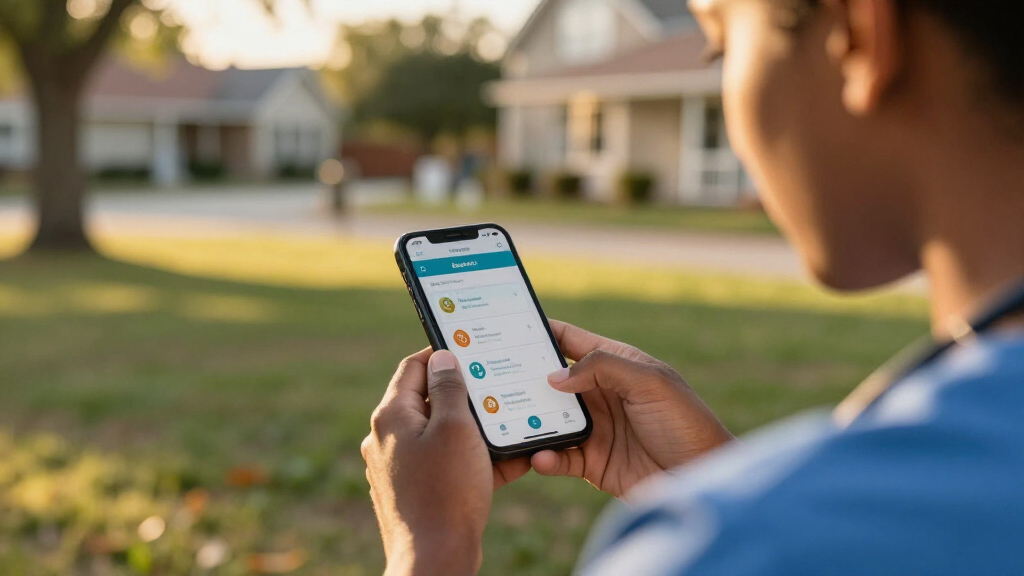
The benefit check bot is a white-label conversational AI tool designed to be embedded on clinic or nonprofit websites or used via SMS by benefits navigators. It asks a series of yes/no and multiple-choice questions to quickly assess a client’s eligibility for programs such as SNAP, Medicaid, EITC/CTC, WIC, and LIHEAP. The bot then generates a list of likely-eligible programs with estimated benefits to the dollar, along with next application steps and document checklists.
Developed in response to the shutdown of Benefits Data Trust—an organization that for 20 years screened and enrolled low-income clients across seven states—the bot aims to fill a capacity gap left by the nonprofit’s closure. The current pilot involves 5-10 benefits navigators in two states, who will test the tool on over 100 real client intakes over 4-6 weeks. Early metrics focus on screening time reduction, accuracy, and the share of clients identified as eligible for additional benefits they were not previously enrolled in.
The model operates on a B2B2C SaaS basis, with tiered subscriptions for clinics, health systems, and nonprofits. Additional revenue streams include white-label API licensing and outcome-based contracts with Medicaid managed care organizations, which benefit from higher retention through improved access. The initial rollout targets 2-3 states, with plans to expand based on pilot success and user feedback.
Transforming Benefits Access Through AI Automation
This development is significant because it addresses a persistent challenge in social determinants of health programs: efficiently identifying and enrolling eligible individuals. By automating eligibility screening, benefit check bots could dramatically increase the number of low-income families accessing benefits, potentially unlocking over $100 billion in unclaimed resources annually. For healthcare providers and community organizations, this means reducing administrative burdens, saving time, and improving service quality. Policymakers and payers could see higher program retention rates and better health outcomes, as social needs are more effectively addressed.
Furthermore, the technology aligns with broader trends toward digital transformation in social services, leveraging conversational AI to deliver multilingual, real-time assistance at minimal cost. If scaled successfully, benefit check bots could become a standard component of social care workflows, making benefits more accessible and reducing disparities in social support access.
benefit eligibility screening software
As an affiliate, we earn on qualifying purchases.
As an affiliate, we earn on qualifying purchases.
Longstanding Challenges in Benefits Enrollment
For years, low-income families have faced complex, fragmented eligibility rules across federal, state, and local programs. Applications are often lengthy, document-heavy, and require multiple visits or calls to different agencies. Manual screening by caseworkers or navigators is time-consuming and prone to errors or omissions, leading to over $100 billion in benefits remaining unclaimed annually, according to estimates.
The closure of Benefits Data Trust in 2024, a major nonprofit that provided outsourced benefits enrollment services, has heightened the need for alternative solutions. Simultaneously, post-pandemic Medicaid redeterminations have caused millions to undergo eligibility checks, exposing the inefficiencies of manual processes. Advances in conversational AI and natural language processing now make it feasible to develop automated screening tools that are multilingual, scalable, and cost-effective, opening new opportunities to improve access and efficiency.
social benefits eligibility check tool
As an affiliate, we earn on qualifying purchases.
As an affiliate, we earn on qualifying purchases.
Uncertainties in Pilot Outcomes and Scalability
It is not yet clear how accurately the benefit check bot will perform in real-world settings, particularly regarding eligibility accuracy and user experience. The pilot involves limited states and organizations, and results may vary based on local rules and client populations. Long-term scalability, integration with existing systems, and user acceptance also remain to be tested. Further, data privacy and security considerations are still being addressed as the technology moves toward wider deployment.
As an affiliate, we earn on qualifying purchases.
Next Steps for Validation and Expansion
Following the pilot testing over the next 4-6 weeks, organizers will analyze metrics such as screening time reduction, eligibility accuracy, and client engagement. If results are promising, plans include expanding to additional states, onboarding more organizations, and refining the interface based on user feedback. Stakeholders will also explore partnerships with Medicaid agencies and other social programs to embed the technology into broader social care workflows. A successful pilot could lead to broader adoption and potential policy support for AI-driven benefits screening.
medicaid and SNAP application assistance
As an affiliate, we earn on qualifying purchases.
As an affiliate, we earn on qualifying purchases.
Key Questions
How does the benefit check bot improve eligibility screening?
The bot automates the process by asking clients a series of questions to estimate their eligibility for multiple programs quickly, reducing manual effort and errors.
What programs can the benefit check bot assess?
It can evaluate eligibility for SNAP, Medicaid, EITC/CTC, WIC, and LIHEAP, among others, with estimates to the dollar and next-step application guidance.
Who can use these benefit check bots?
Healthcare systems, Federally Qualified Health Centers (FQHCs), community nonprofits, and state agencies involved in social determinants of health programs.
What are the main challenges for scaling this technology?
Key challenges include ensuring accuracy across diverse local rules, integrating with existing systems, maintaining data privacy, and gaining user acceptance.
When will the pilot results be available?
The pilot testing is expected to conclude within 4-6 weeks, with results analyzed shortly thereafter to determine next steps.
Source: IdeaNavigator AI
Halloween Picks
halloween
As an affiliate, we earn on qualifying purchases.